Salesforce Just Spent $3.6 Billion on AI Agents. Here’s What Businesses Should Learn.
Salesforce recently announced its acquisition of AI customer service platform Fin for $3.6 billion, signaling one of the clearest indicators yet of where enterprise software is heading.
At first glance, the acquisition appears to be another major investment in artificial intelligence. But when you look closer, the real story isn’t AI alone.
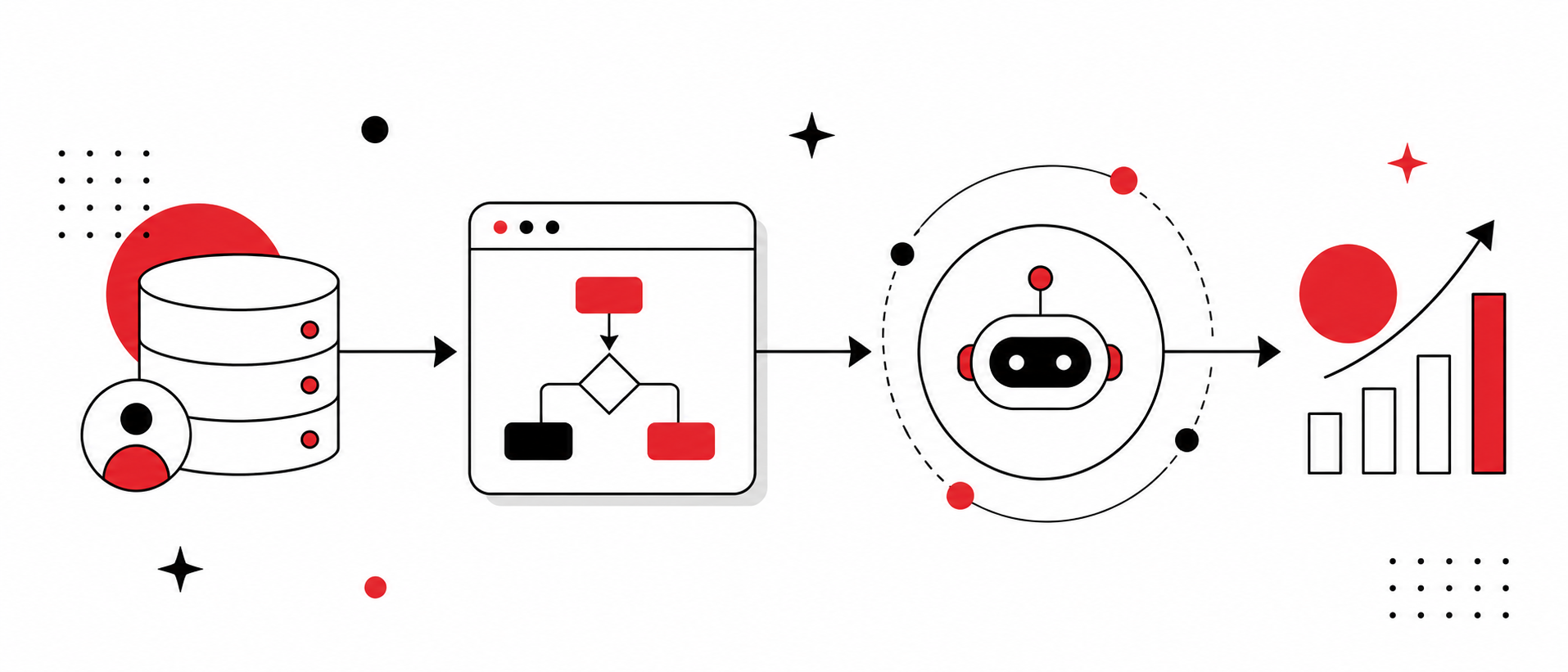
It’s the convergence of CRM, automation, and AI into a single operational system.
For businesses evaluating their own technology strategy, there are important lessons hidden behind this acquisition.
The Bigger Story Behind the Acquisition
Fin has built a reputation around AI-powered customer service. Its platform allows businesses to deploy intelligent agents that can communicate with customers across multiple channels, including live chat, WhatsApp, SMS, phone calls, and workplace communication tools.
Salesforce plans to integrate Fin’s technology into Agentforce, its enterprise AI platform that enables organizations to build custom AI agents capable of handling business processes automatically.
This isn’t simply about customer support.
It’s about creating systems that can perform work.
The acquisition reflects a growing belief among enterprise software companies that the future belongs to intelligent systems capable of understanding context, executing workflows, and assisting employees across every stage of the customer journey.
CRM Systems Are Evolving
Traditionally, CRM systems served a straightforward purpose.
They stored customer information.
Businesses used CRMs to manage contacts, track opportunities, record conversations, and monitor sales pipelines.
These systems became valuable repositories of information, but they largely depended on employees to take action.
A salesperson had to follow up.
A support representative had to answer questions.
A manager had to review reports.
A coordinator had to assign leads.
The next generation of CRM platforms is fundamentally different.
Instead of simply storing information, they are beginning to participate in business operations.
Modern CRM systems can:
- Qualify leads automatically
- Route inquiries to the correct team member
- Generate responses
- Schedule follow-ups
- Summarize customer conversations
- Recommend next actions
- Assist support teams
- Trigger workflows without manual intervention
The CRM is no longer just a database.
It is becoming an operating system for the business.
Why AI Alone Isn’t Enough
Many organizations are experimenting with AI tools.
Some use AI for content creation.
Others use AI for research, customer support, or internal productivity.
While these tools can provide value, many businesses struggle to generate meaningful results because the technology remains disconnected from their operational systems.
An AI assistant that cannot access customer data has limited value.
An AI chatbot that cannot interact with the CRM creates additional work.
An AI tool that cannot trigger business processes often becomes another application employees must manage.
This is why Salesforce’s acquisition is significant.
The real value comes from combining AI with customer data, business workflows, communication channels, and operational processes.
When these systems work together, AI moves from being a novelty to becoming a measurable business asset.
What This Means for Businesses
Regardless of industry, most organizations face similar operational challenges.
Leads come from multiple channels.
Customer inquiries need timely responses.
Teams spend hours on repetitive administrative tasks.
Important follow-ups are missed.
Information becomes scattered across different systems.
AI-powered CRM systems can help solve these problems by:
- Automatically qualifying and prioritizing leads
- Routing inquiries to the right teams
- Triggering follow-up sequences
- Generating reminders and notifications
- Summarizing customer interactions
- Providing employees with relevant context and recommendations
The result is faster response times, improved customer experiences, and greater operational efficiency.
More importantly, employees can spend less time managing processes and more time focusing on high-value work.
The Rise of Intelligent Business Operations
One of the most important takeaways from Salesforce’s acquisition is that businesses are moving beyond standalone AI tools.
The next phase of adoption is focused on operational integration.
The winners will not necessarily be the companies using the most AI.
They will be the companies using AI within the right workflows.
Organizations are beginning to recognize that operational efficiency is created when data, processes, automation, and intelligence work together.
This is where the greatest long-term value will emerge.
Imagine a business where:
- New leads are automatically captured and assigned
- Customer inquiries receive immediate responses
- Sales teams receive recommendations on next actions
- Support teams have instant access to customer history
- Routine administrative tasks happen automatically
This is the direction modern business systems are moving toward.
Why Custom CRM Solutions Are Becoming More Valuable
As businesses adopt more sophisticated workflows, many are discovering the limitations of generic CRM platforms.
Off-the-shelf solutions often force organizations to adapt their processes to the software.
Custom CRM systems take the opposite approach.
They are designed around the specific workflows, sales processes, customer journeys, and operational requirements of the business.
When AI and automation are integrated into a custom CRM environment, organizations gain significantly more flexibility and control over how work gets done.
This creates opportunities for smarter automation, better customer experiences, and stronger business performance.
Rather than adding disconnected tools, businesses can build a centralized system where customer data, workflows, automation, and AI work together seamlessly.
The Real Lesson Businesses Should Take Away
Salesforce did not spend $3.6 billion simply to acquire another AI product.
The acquisition reflects a larger shift taking place across the software industry.
CRM systems are evolving from databases into intelligent operational platforms.
AI is becoming most valuable when connected directly to customer data, workflows, communication channels, and business processes.
For business leaders, the question is no longer whether AI matters.
The more important question is how AI, automation, and CRM can work together to improve efficiency, customer experience, and growth.
Key Takeaway
The future of business technology isn’t AI alone.
It’s the combination of CRM, automation, and AI working together as a unified system that helps businesses operate faster, smarter, and more efficiently.
Companies that focus on building connected systems—not just adopting new tools—will be best positioned to scale, improve customer experiences, and remain competitive in the years ahead.
Ready to Modernize Your Operations?
Global Tech Signal helps businesses design and implement custom CRM systems, intelligent automation, and AI-powered workflows that improve efficiency and support long-term growth.
If you’re evaluating how CRM, automation, and AI can work together in your business, our team can help identify the highest-impact opportunities and build solutions tailored to your operations.

